Quick answer
The short version
It is not too late. The idea that dance must begin in childhood applies to professional dancers who perform on stage; in hobby dance, consistency matters more than starting age. Adults understand explanations faster than children and can break down a move that is not working. Get through the first three months without overdoing it, and after that it is a matter of habit, not stamina.
“Isn't it too late if I start now?”
One person first went as far as the door of a dance studio at thirty-seven, then turned back. Everyone behind the glass door seemed good, so they even gave up the plan to only ask about enrollment.
What they feared was not skill. They were afraid age had already set the ceiling of their ability.
This article explains why that ceiling does not exist in hobby dance. Instead, it walks through the points adults actually hit and how to get past them.

When “you have to start young” is true, and when it is not
Professional dancers are different. In fields such as ballet or competitive performance, where joint range of motion is itself evaluated, a body developed during the growth years has an advantage.
Hobby social dance has different criteria. Social dance is not memorizing fixed choreography for a stage; it is dance made with a partner in the moment to music. What you need here is not the splits, but counting beats, shifting weight, and reading your partner's signals.
All three improve through repetition regardless of age. Adults are often quicker at listening to and understanding explanations.
| Item | Professional dance | Hobby social dance |
|---|---|---|
| Joint range of motion | An evaluation criterion | Your comfortable range is enough |
| Starting age | Training during growth is advantageous | No limit |
| Core ability | Precise reproduction | Keeping the beat and communicating with a partner |
| How skill is judged | Judging and the stage | Whether today's one song was enjoyable |
The three stages adult beginners go through
- 01
Month 1: when your body does not listen
Your head understands, but your feet are half a beat late. That is normal. Do not add moves at this stage; repeat one basic step first without music, then to slow music.
- 02
Month 2: when you compare yourself with others
The person next to you suddenly seems good. Usually they simply began two or three months earlier. Change the comparison from them to last week's you, and this stage becomes shorter.
- 03
Month 3: when you start to hear the music
A moment comes when you briefly forget to count your feet and listen to the song. Once you reach this point, far fewer people quit. Most people pass through it regardless of starting age.
The pace differs for everyone. Some take six months attending once a week, while others move through it quickly by taking concentrated workshops. The order of the stages is the same, but their duration varies greatly.
Choose your first class this way to reduce failure
Adult beginner class checklist
- Whether the class is clearly labeled ‘beginner’ or ‘basic’
- How many people are in a class and whether the instructor can give individual feedback
- Whether you can register alone without a partner
- Whether there is guidance on catching up after an absence
- Whether it is within a sustainable distance from home or work
The final item matters more than expected. Even the best class leads to more absences from the second month when the one-way journey takes an hour.
If your body feels uncomfortable or you develop pain, stop the movement and consult a professional if needed. Warm-ups, water, and enough rest are wise regardless of age.


You can also visit a festival before enrolling in a studio
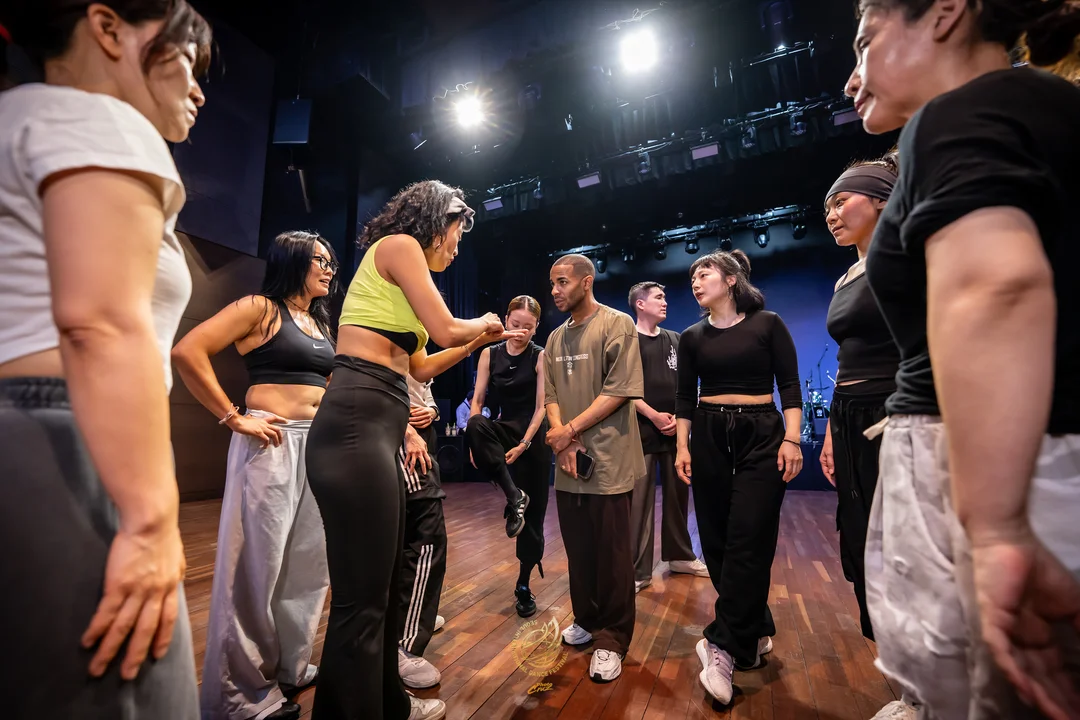
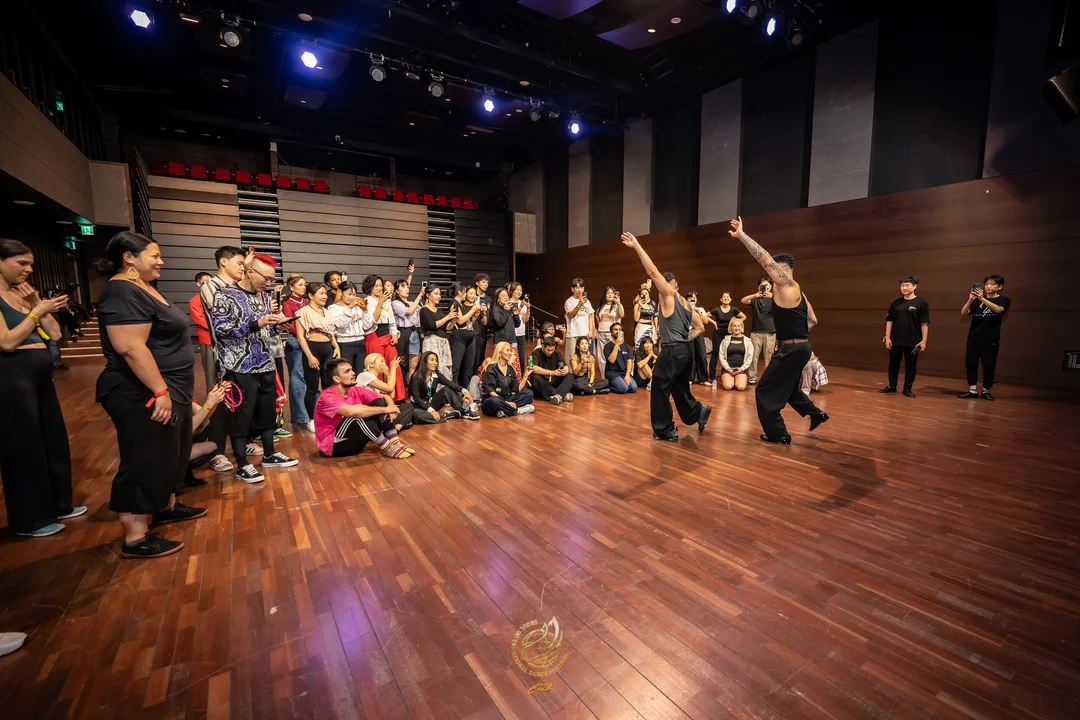
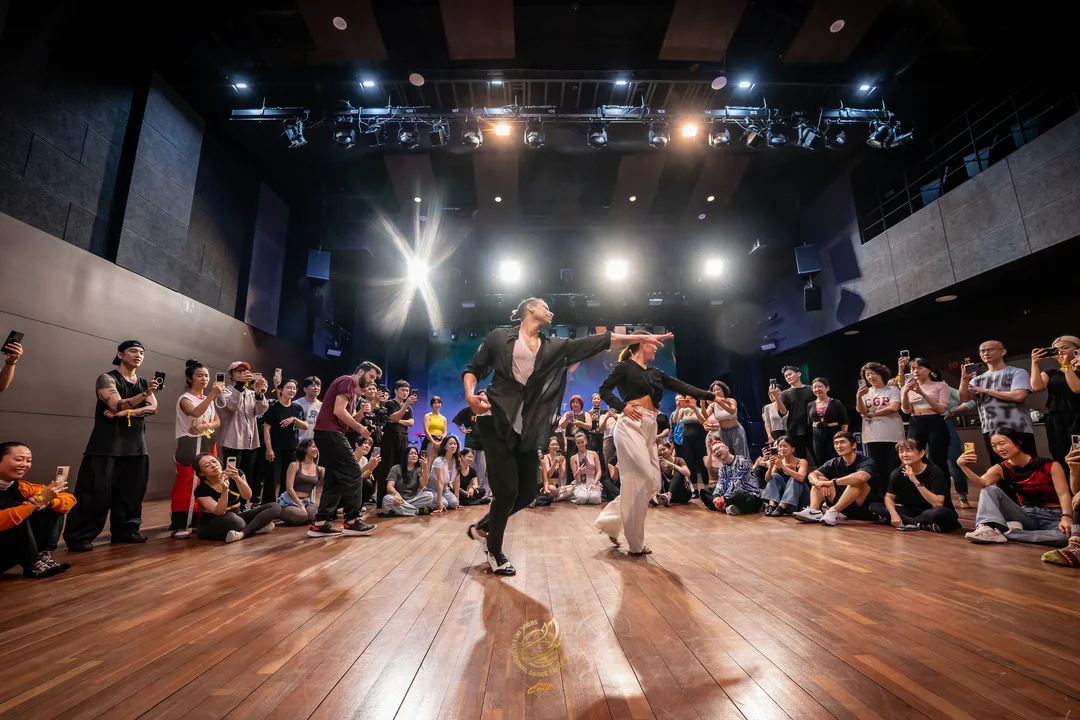
If you want to find out whether this hobby suits you before paying for several months of lessons, a festival shows you everything in a short time. SIDF 2026 had 872 participants, with workshops, performances, socials, battles, and live concerts over three days.
5,186 official photos are public. Browse the albums to see for yourself who is on the floor and whether it is only people in their twenties.
The next edition, SIDF 2027, runs April 23–25, 2027, at Seoul's Sangam DMC. You can take one workshop and sit to watch the rest.
In hobby dance, ‘too late’ usually means you have not tried it even once.
Small devices that keep you from quitting
How to get past three months
- Fix class day on your calendar and do not make other plans for that time
- Set only one goal each week (this week, do not lose the beat)
- Say hello to one person who started around the same time
- Do not delete video from a bad day; watch it again a month later
- Dance for real outside class once a month
The final item is most effective. If you dance only in a practice studio, you do not feel your progress even when it grows; finish one song in an unfamiliar place such as a social or festival, and that day remains proof.
FAQ
Frequently asked questions
Can I learn dance with no flexibility at all?
Social dance does not require splits or high kicks. It requires shifting weight and keeping a beat, which improve with repetition. Physical condition varies greatly, so do not force extreme angles; begin within your comfortable range.
Are there really people who started in their forties or fifties?
The quickest way to see is to check the 5,186 photos of three days of workshops and socials in the SIDF official album. The photos show that age groups are not concentrated in one place.
Can I learn without a partner?
Many people register alone. Most beginner classes and socials rotate partners, so you need not bring one. Just check the format of that class before registering.
SOURCE
Official information & references
Dates, venue details, and rules are checked against the sources below and current SIDF pages.
- SIDF official photo album See actual participant age ranges and workshop atmosphere
- SIDF official schedule Confirm beginner workshop programming and the final timetable
- SIDF official ticket guide Confirm ways to attend for one day and included programs
This guide is free to read thanks to our partners
Interested in partnering with SIDF? Contact us